


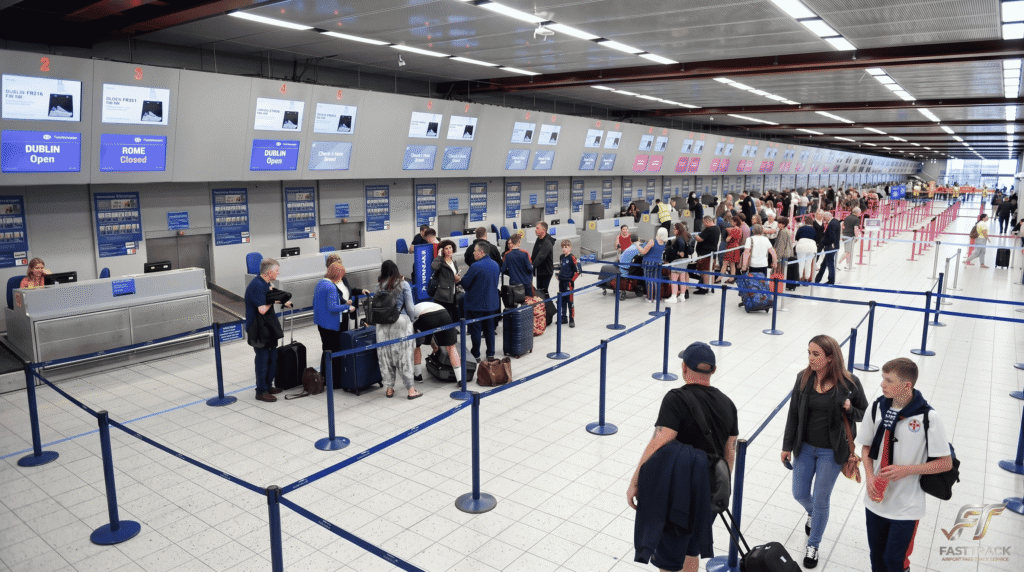
Are you wondering whether you should use the Fast Track service at the airport?
In reality, many passengers have experienced waiting in long lines for dozens of minutes — sometimes more than an hour — at check-in or immigration counters, especially during peak hours. This not only causes stress and fatigue but can also increase the risk of missing a flight, particularly for international travelers or people on tight schedules.
That’s why the airport Fast Track service is becoming increasingly popular as a solution for faster airport procedures, skipping long queues, and saving significant time. However, not everyone truly needs this service — and in some cases, you may end up paying for something unnecessary.
In this article, you’ll learn exactly:
If you’re preparing for a flight and unsure whether to book Fast Track, the sections below will help you make the right decision quickly and confidently.
Do You Really Need Fast Track?
Not everyone traveling through an airport needs to use the Fast Track service. In reality, whether or not you should use it depends heavily on your flight time, the type of trip, and how crowded the airport is.
Many people assume Fast Track is a “mandatory VIP service,” but the truth is: if you’re traveling during quiet hours or you’re already familiar with airport procedures, you may be perfectly fine going through the regular process without much inconvenience.
On the other hand, during busy periods — when airports are crowded and queues are long — Fast Track becomes an extremely valuable solution, helping you save time and avoid unnecessary stress.
So, the answer to whether you should use Fast Track does not depend on the service itself, but rather on your specific situation.
In the following sections, you’ll clearly see:
- When Fast Track is truly necessary
- And when you can skip it without any issue
When Fast Track Becomes the Best Choice
Fast Track is not always essential, but there are situations where using it becomes almost the “optimal choice” if you want your trip to go smoothly and on time.
During peak hours or holiday seasons
Fast Track helps you move through procedures faster via priority lanes, minimizing long waiting times.
When you have a tight schedule or connecting flight
Fast Track helps optimize processing time and reduces the risk of missing your next flight.
When traveling with people who need assistance
Fast Track reduces waiting pressure and provides staff assistance throughout the journey.
When flying internationally for the first time
Fast Track provides direct guidance, helping reduce mistakes and save time.
However, this service is not always necessary. In the next section, you’ll discover situations where you may NOT need Fast Track and can avoid unnecessary expenses.
3 Situations Where You Probably DON’T Need Fast Track
Although Fast Track offers many time-saving benefits, it is not always “worth the money.” In some situations, the difference between using Fast Track and going through regular airport procedures may be minimal.
When the airport is quiet or during off-peak hours
In this case, waiting times are often minimal, so Fast Track may not make a significant difference.
Domestic flights with fewer procedures
In these situations, you can typically complete the process easily without needing Fast Track.
When you have plenty of time before your flight
In this case, the standard airport process is usually more than enough for a smooth journey.
Now that you understand when Fast Track may not be necessary, the next important step is comparing Fast Track vs regular airport queues to see whether the difference is truly worth paying for.
Real Comparison: Fast Track vs Regular Airport Queues
Processing Time
Fast Track, on the other hand, allows you to use priority lanes, significantly reducing waiting times — often to just a few minutes at each checkpoint.
Convenience & Overall Experience
Fast Track offers a smoother experience with staff assistance throughout the process, helping you move efficiently and reducing confusion.
Does Fast Track Really Save Time?
The answer is yes — but not in every situation. The effectiveness of Fast Track depends heavily on your flight time and how crowded the airport is.
- During peak hours
When the airport is crowded, check-in, security, and immigration areas are often overloaded. Waiting times can range from 30 to 90 minutes, or even longer during holidays and travel seasons.
In these situations, Fast Track allows you to use priority lanes, reducing processing time to only around 5–15 minutes per checkpoint.
This means you could save anywhere from 45 to 60 minutes — or even more when passenger traffic is extremely high.
- During off-peak hours
On the other hand, if you fly during quieter hours, airport counters and security checkpoints are usually much less crowded. Waiting times may only be around 5–10 minutes.
In this case, Fast Track may not create a significant difference, since you can already complete procedures quickly without the service.
- The deciding factor is your flight timing
Many people assume Fast Track always saves time, but that is not entirely true. The value of the service mainly depends on whether the airport is crowded or not at the time of your trip.
If you fly during peak hours, Fast Track becomes an extremely valuable solution. If you travel during quieter periods, you may not need it at all while still staying on schedule.
- It’s not just about time — it’s about control and comfort
Besides shortening waiting times, Fast Track also reduces stress throughout the airport process. You do not need to worry about long queues, handling every step yourself, or the risk of missing your flight.
For many travelers — especially business travelers or people with tight schedules — this is the real value of the service.
Is Fast Track Worth the Money in Every Situation?
The honest answer is: not always. Fast Track is only truly worth it when it solves a specific problem for you — mainly saving time and reducing stress during airport procedures.
When Fast Track is truly worth it
Fast Track provides clear value in situations such as:
• Flying during peak hours or busy travel seasons
• Having a tight schedule or short layover
• Traveling for business and needing to stay on time
• Traveling with children, elderly passengers, or first-time travelers
When Fast Track may not be needed
On the other hand, the value of Fast Track becomes much lower in situations like:
• Flying during quiet hours
• Already familiar with airport procedures
• Having plenty of time before departure
• Taking a simple domestic flight with fewer procedures
Comparing the cost and the value you receive
At its core, Fast Track is a service where you pay for convenience. So the real question is:
- Do you actually need to save time?
- Do you want a less stressful airport experience?
If the answer is yes, Fast Track is a reasonable investment.
If not, you can absolutely save the extra cost and still have a smooth journey.
The practical perspective: Not everyone needs it, but for the right traveler, it is extremely valuable
The most important thing to understand is that Fast Track is not designed for everyone. However, for travelers who value speed, certainty, and comfort, it delivers very clear benefits.
In other words, Fast Track is not a luxury — it is simply a practical solution for specific travel situations.
In the final section, we will summarize exactly when you SHOULD and SHOULD NOT use Fast Track so you can make the right decision quickly.
Is Fast Track Worth the Money in Every Situation?
Fast Track is not a service that is “always worth it.” Whether it makes sense depends entirely on your travel situation at the time of your flight.
The real value of Fast Track is not the service itself, but whether it helps solve a specific problem — such as long queues, the risk of missing a flight, or the stress of navigating a crowded airport.
In those situations, paying for Fast Track is essentially paying for time, convenience, and a smoother travel experience. For many travelers, especially those with important schedules, that can be completely worth it.
On the other hand, if your trip is relaxed, the airport is not crowded, and you are already familiar with airport procedures, Fast Track may not create enough added value to justify the extra cost.
In other words, Fast Track is only truly “worth the money” when it helps you avoid a meaningful inconvenience or save a significant amount of time — not simply because it is considered a premium service.
Conclusion: When You SHOULD and SHOULD NOT Use Fast Track
Overall, there is no universal answer to whether you should use Fast Track or not.
If you are flying during peak hours, have a tight schedule, are traveling for business, or simply want a smoother and faster airport experience, Fast Track is definitely worth considering.
On the other hand, if you have plenty of time, are flying during quiet hours, and do not feel pressured by airport procedures, you can skip the service and still enjoy a smooth journey.